Before you go
Koto concert in Kyoto: what to expect
Socks, shoes, photos, seating, finding the two venues and fitting the hour into a Kyoto day, checked against the organiser's pages.
Reserve a seat at the concert ↗Quick answer
Wear everyday clothes and socks, bring shoes that slip off easily and arrive five to ten minutes early. Expect a quiet, close room where the musicians explain the koto and the shamisen before playing. Photos without flash are welcome unless the staff say otherwise. The townhouse is in the Saiin district and the bathhouse is near Kyoto Station; your confirmation gives the exact address for the room you booked.
Your checklist at the door
| What to do | |
|---|---|
| Clothes | Everyday wear, nothing formal |
| Feet | Socks, shoes that slip off |
| Arrival | Five to ten minutes early |
| Phone | Silent, no flash |
| Bags | Small, leave luggage behind |
What to wear and bring
The organiser's advice is simple: regular, everyday clothing, and nothing to bring, because everything is provided. The one practical detail is footwear. Both venues recommend socks because the concert room has tatami flooring, and Japanese homes expect you to step out of your shoes at the entrance. Choose shoes that slip on and off, and wear socks without holes. Keep your confirmation ready on your phone for check-in. A small bag is enough, since you carry only a phone and your card or cash for the day. Layers help in an older building that is not climate-controlled like a modern hall, and a thin scarf folds away easily when the room is warm.
- Socks, whole and clean
- Shoes that come off without laces
- Your booking confirmation on your phone
- A light layer for the room
Finding the townhouse in Saiin
The townhouse concert takes place in the Saiin district, a residential part of Kyoto rather than a sightseeing street. Rely on the meeting point in your confirmation, which depends on the option you selected. The organiser's access notes start from Saiin Station, on the Hankyu line. Residential lanes can look alike after dark, so open the map in your confirmation before you leave the platform rather than after. Arriving a few minutes early also gives you time to find the entrance and slip off your shoes without hurrying, and the walk from the station is easier to judge in daylight than after dark.
Finding the bathhouse near Kyoto Station
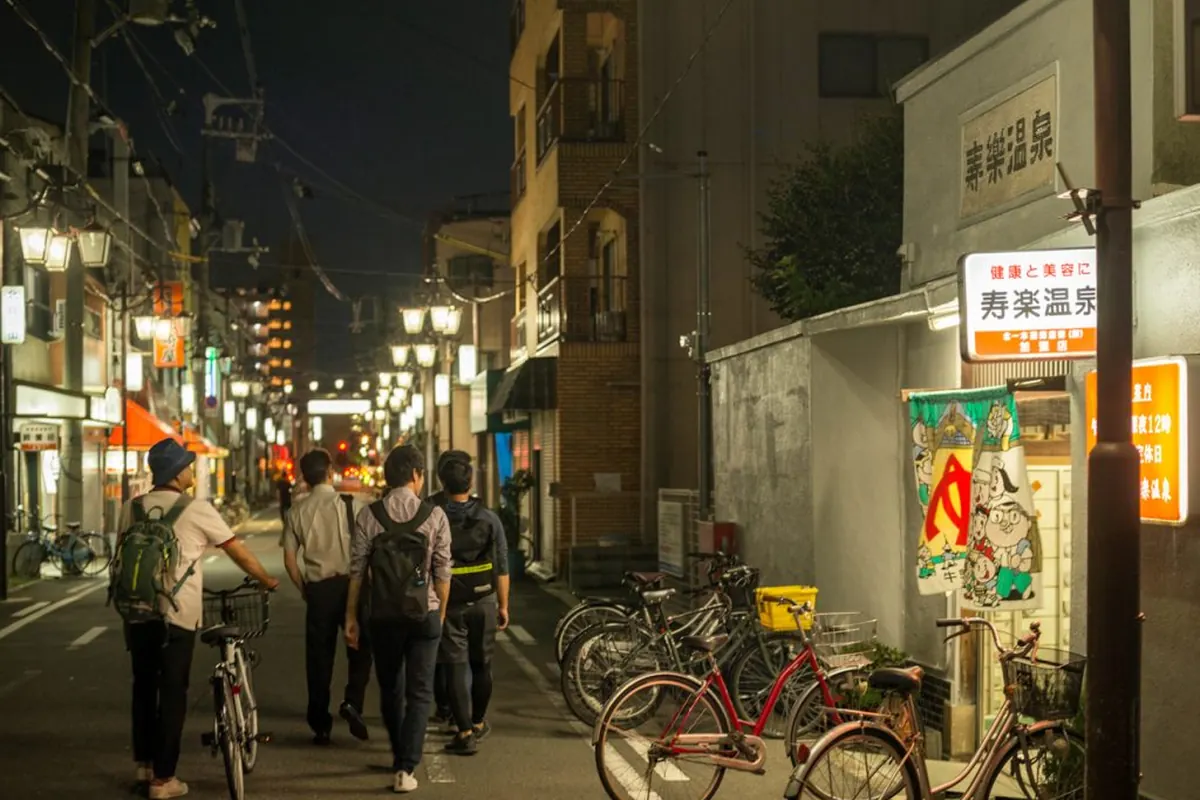
The bathhouse hall, called Kujo-yu, is given by the organiser as a quarter of an hour from Kyoto Station. That suits visitors arriving or leaving Kyoto by train. Kyoto's tourism board advises combining trains and buses, and warns that route planners can underestimate travel times when traffic is heavy. Leave a margin of a few minutes at least, because arriving late into a quiet room interrupts everyone already seated.
Read next: Kyoto koto concert: how to choose
Arriving and sitting down
Get there five to ten minutes early. The programme opens with check-in and seating, together with a few words on how the room works, and the introduction to the instruments follows straight after. In the townhouse you sit on cushions or on chairs, close to the player. In the bathhouse the seats are in rows facing the performers. Because both rooms are small, a late arrival is noticed by everyone, so allow time for the walk from the station. If you would rather sit on a chair than a cushion, mention it at check-in. The townhouse offers both.
Photos and filming
Photo time with the performers is part of the programme, at the end, with the questions. The organiser also says that photography without flash is welcome unless the staff instruct otherwise, and its FAQ says that photos and videos are fine. Common sense still applies in a room this small. Silence your phone, switch off the shutter sound, skip the flash and keep filming for the moments the musicians invite. Ask first if you want to record a whole piece. Many guests keep the camera for the end, when the players pose with their instruments and the room relaxes.
What the commentary covers
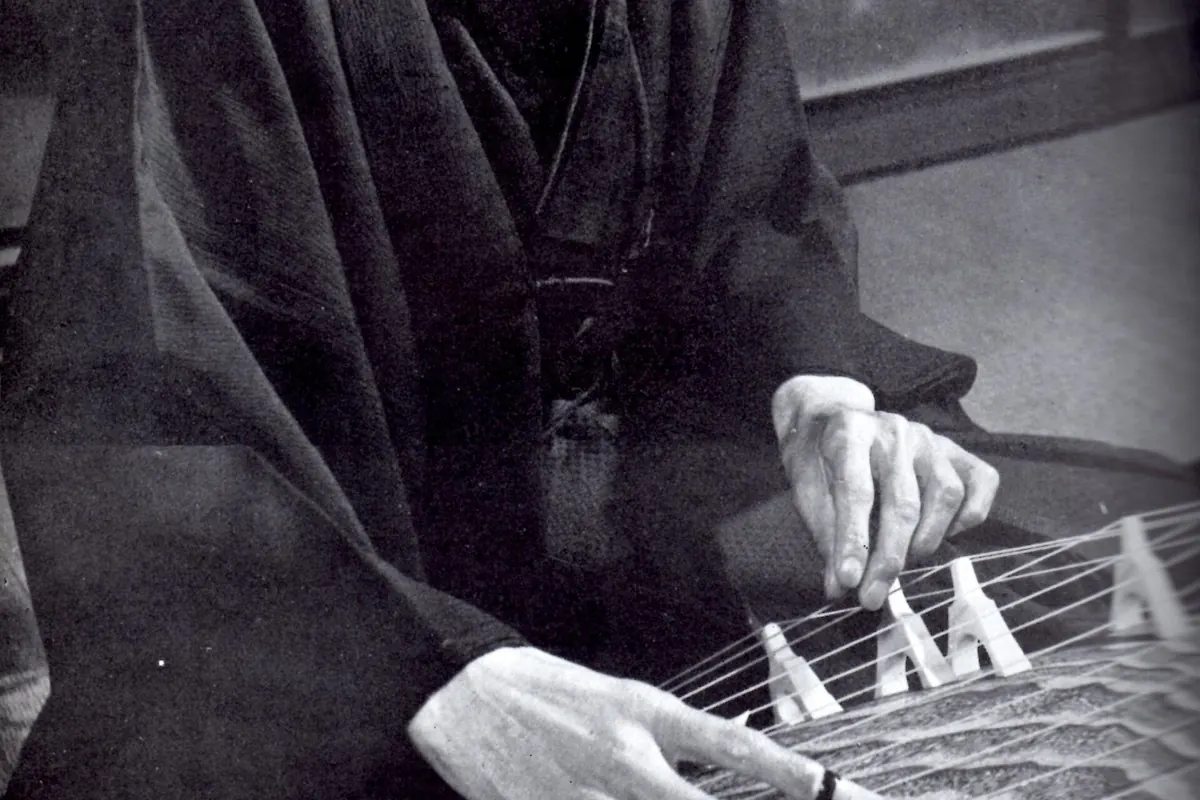
Before the music, the player explains how the koto and the shamisen are built and played: the picks, the bridges, the way the strings are tuned and the notation that looks nothing like a Western score. Commentary is bilingual, in Japanese and English. After the concert come questions, so prepare one in advance. Asking why the koto bridges move, or what a shamisen skin is made of, is a good start, and the answers lead naturally into the history. No specialised knowledge is required: most guests arrive knowing little about traditional Japanese instruments, and the introduction starts from the basics.
Read next: Shamisen: three strings, one plectrum
How close and how quiet
Both rooms are quiet by design. The townhouse seats fewer than a dozen and the bathhouse around thirty. That is the attraction: you are close enough to hear the buzz of a shamisen string and the decay of a koto note. It also means a cough, a rustling bag or a child's chatter carries to everyone. Switch devices to silent before you enter, keep bags small and wait for the end of a piece before you shift position. If you travel with a fidgety companion, agree a quiet signal beforehand and settle any questions about directions before you sit down.
Seasons and old buildings
The old wooden houses of Kyoto were designed for cold winters and for hot, humid summers alike, fitted with sliding screens that went up or came down as the seasons turned. A concert in such a house or in a converted bathhouse follows the weather more than a modern hall does. Wear layers that come off and go on quietly, bring a light scarf or cardigan, and in summer expect a warm room.
Children, comfort and access
Babies under one year are not suitable for this concert. Older children are welcome in principle, but they should be able to sit still and listen for about an hour. The townhouse offers cushions or chairs, so anyone with knee or back trouble should say so when booking and ask which seating is available. If stairs, floor-level seating or mobility are a concern, write to the organiser through the booking page before you reserve; the venues are older buildings and the details differ by room.
Fitting it into a Kyoto day
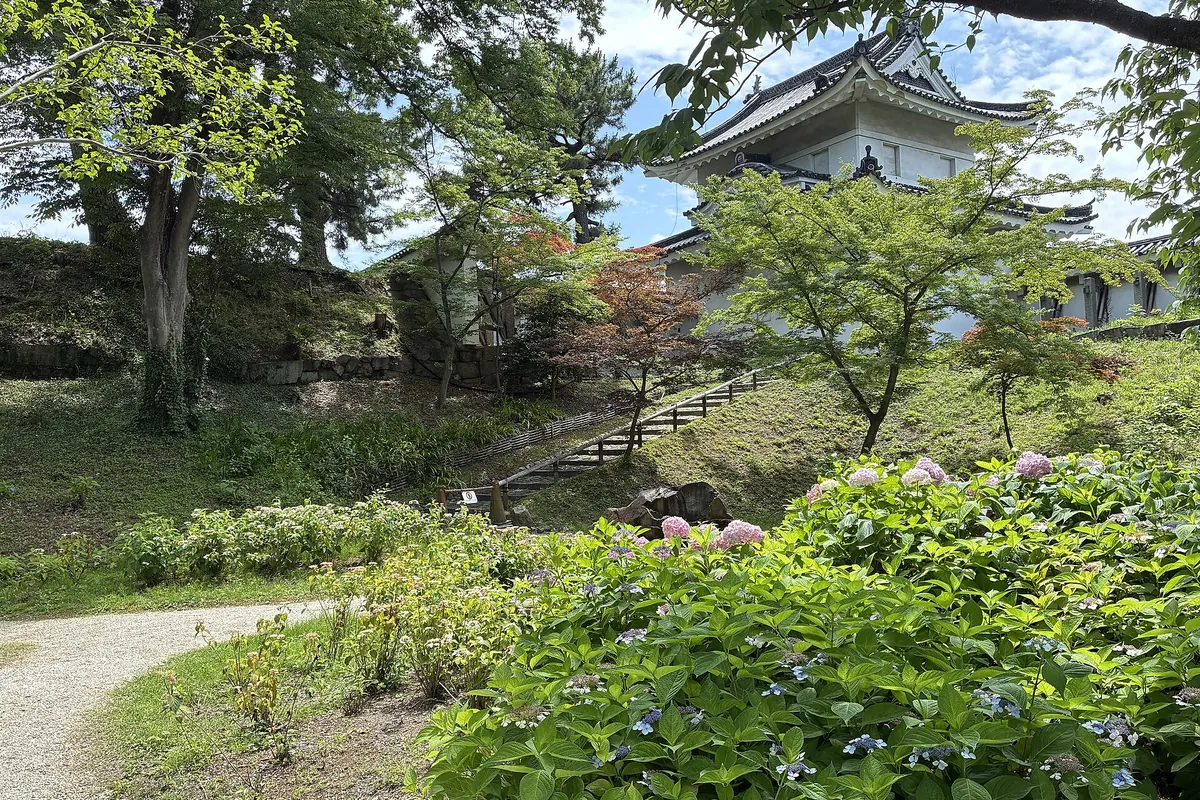
The organiser lists Arashiyama, Nijō Castle and Nishiki Market as easy pairings with the Saiin townhouse. Nijō Castle belongs to the Historic Monuments of Ancient Kyoto, a World Heritage property. Because the concert starts at a fixed time that the calendar shows, build the day backwards from it: do the big sightseeing first, eat early and arrive with time to spare rather than in a rushed taxi. A workable plan is to do the large sights first, then eat before you set out, since no food is included, and arrive for the concert unhurried. Arashiyama is a longer outing, so give it a separate half day if you can, rather than squeezing it in before a fixed start time.
Who this isn't for
If you want food with your music, this is the wrong ticket, since no meal or drinks come with it. If you cannot be quiet for an hour, a lively family with toddlers will struggle in a room built for listening. If you want spectacle, with lights and costumes, a drumming show suits better. And if your Kyoto schedule is packed to the minute, skip it: this concert rewards arriving calm and early, not in a hurry. If you are hoping to take a private lesson in the instrument for an hour, the hands-on option is a short beginner try, not a full class.
Frequently asked questions
Are shoes allowed in the concert room?
No, expect to take them off at the entrance. The room has tatami flooring, and the organiser recommends socks. Wear shoes you can remove easily and socks without holes.
Is there a dress code?
No. The organiser says regular, everyday clothing is fine. Comfortable clothes that let you sit low or on a cushion are the sensible choice.
How early should I arrive?
Arrive five to ten minutes before the start. The programme begins with check-in and seating, and a late arrival disturbs a small, quiet room.
Can I take photos and video?
Photos without flash are welcome unless the staff say otherwise, and there is photo time with the musicians. Ask before filming a whole piece.
Which language is the commentary in?
Japanese and English. The musicians are not fluent in conversation, and an assistant helps translate during the questions when needed.
Can I bring a bag or luggage?
Keep bags small, because the rooms are compact. Leave large luggage at your hotel or in a station locker before you go.
Sources